









The global apparel industry is undergoing a major transformation as manufacturers look to make the supply chain more resilient and delivery times faster and more responsive to the consumer demand. Nearshoring—which involves moving production nearer to the markets than to distant offshore manufacturing hubs—is among the most remarkable factors pushing the trend.
The benefits of nearshoring are many, such as lower transportation expenses, quicker lead times, and tighter visibility of the supply chain, but nearshoring affects key manufacturing decisions. In such cases, we find that the selection of material and thread is crucial to the product quality, efficiency of manufacturing, and also the cost. Nearshoring has a significant impact on material and thread selection, as manufacturers adjust to new sourcing and production demands to stay competitive in a rapidly changing market.
Understanding Nearshoring in Apparel Manufacturing
Nearshoring involves moving manufacturing operations to countries geographically closer to a company’s primary consumer market. For instance, North American apparel manufacturers can move production from Asia to Mexico, Central America, or other nearby countries. Likewise, brands from Europe may move production to the East European nations, Turkey, or the North Africans.
Since manufacturing sites are moving, manufacturers should reconsider which fabric, trims, and sewing threads to use as they source them in response to the changing manufacturing environment.
The Impact of Nearshoring on Material Selection
1. Shorter Supply Chains Require Strategic Sourcing
Nearshoring offers many advantages, especially in terms of streamlining supply chain complexity. But this benefit can only be maximized when material is acquired efficiently, in the same geographic area.
Fabric suppliers are often sought close to manufacturing to avoid delays in receiving and coordinating with the manufacturer. This could include reviewing traditional supply sources and sourcing locally the products they might require for quality and/or performance.
Hence, the cost consideration of material choice is gaining more weight than ever now in terms of proximity, reliability, and responsiveness of the supplier.
2. Greater Emphasis on Lead Time Reduction
The fast-fashion, on-demand manufacturing methods demand quick turnaround times. What used to work as a source from a long distance away may no longer be suitable to help meet nearshoring goals from longer shipping times.
Thus, manufacturers are making their utmost effort to prioritize the following:
- Readily available fabrics
- Regionally stocked materials
- Flexible supply agreements
- Short replenishment cycles
When deciding on materials, factors are not only taken into consideration but also lead time as well.
3. Increased Focus on Sustainability
The use of nearshoring can be particularly aligned with other sustainability objectives, such as transportation-related emissions. This means that manufacturers could prefer materials that facilitate eco-friendly manufacturing processes.
Popular eco-friendly material choices include:
- Organic cotton
- Recycled polyester
- Regenerated cellulose fibers
- Locally sourced natural fibers
- Low-impact dyed fabrics
Choosing materials with high sustainability ratings can enable brands to reinforce their environmental statements and support local supply chains.
How Nearshoring Influences Thread Selection
Sewing thread is not a major cost factor in the garment even though it’s only a small part of the total value, but it does have a big influence on garment performance, manufacturing efficiency and quality. Nearshoring brings in new factors with regards to threads’ sourcing and selection.
- Regional Thread Availability Becomes More Important
Traditional global manufacturing models involve suppliers of thread who are close to key centres of production, such as for apparel manufacturing. If production shifts to new locations or new countries, manufacturers will consider if there are local thread products they can use.
Key considerations include the following:
- Supplier presence within the region
- Inventory availability
- Delivery reliability
- Technical support capabilities
- Colour matching services
Working with suppliers who have regional distribution can also help ensure a steady supply while avoiding production delays.
2. Faster Production Cycles Demand Consistent Thread Performance
Often, nearshoring is implemented to speed up production and cut down on time-to-market. With these conditions, thread breakage, poor thread quality, or late deliveries can be very expensive.
Manufacturers now emphasise threads with the following:
- High tensile strength
- Excellent sewability
- Good uniformity from lot to lot
- Reduced machine downtime
- Reliable stitch formation
Advanced polyester or polyester corespun thread is usually used for high-speed sewing that maintains durability and appearance.
3. Greater Need for Flexible Product Development
Brands can also leverage nearshoring as a way to react faster to market trends by having access to smaller batch sizes and faster lead times for product development.
This flexibility demands thread solutions capable of fast colour changes, various fabrics, and an array of different garment categories.
Manufacturers may favour thread systems that provide the following:
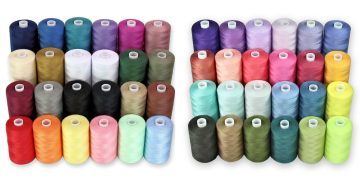
- Broad colour ranges
- Versatile performance characteristics
- Positive fit for diverse sewing uses
- Simplified inventory management
The multi-purpose nature of the thread (self-lubricating thread) helps to streamline production and decrease the complexity in a high-speed manufacturing setting.
Technology and Supplier Collaboration
Collaboration between apparel manufacturers and supply chain partners can be enhanced through nearshoring. By bringing the geographic footprints closer together, they will be able to communicate, resolve issues more quickly and offer better support for product development.
The thread suppliers are increasingly adding value by providing the following:
- Technical consultations
- Product testing
- Colour development assistance
- Sustainability guidance
- Process optimisation recommendations
The nearshoring concept taps into the operational advantages of the relocation of manufacturing facilities while ensuring that product quality is preserved, and one key area for leveraging this change is supplier relationships.
Future Outlook
Nearshoring is likely to be a growing trend in the apparel manufacturing sector as the world’s value chains continue to adapt. Brands will be revisiting regional production methods and local sourcing possibilities to become more agile and resilient.
Important factors in this shift will continue to be the choice of materials and thread. Successful integration of sourcing with nearshoring goals can result in enhanced efficiency, lowered risk and increased speed to market for manufacturers.
As the end-user expectations and global market dynamics change, the apparel industry is expected to gain a competitive edge with advanced thread technologies, sustainable materials, regionally integrated supply networks, and more.
Conclusion
Nearshoring is changing the apparel industry by moving production nearer to consumers and generating more responsive supply chains. The advantages range from faster lead times to increased sustainability and flexibility, but key to success is choosing the right materials and thread.
In addition to performance and price, a manufacturer should consider fabrics and sewing threads in terms of availability, reliability and sustainability for a region. Apparel companies can maximize the benefits of nearshoring and provide valuable products to consumers in record time by working with capable suppliers and selecting materials that enable efficient manufacturing.