










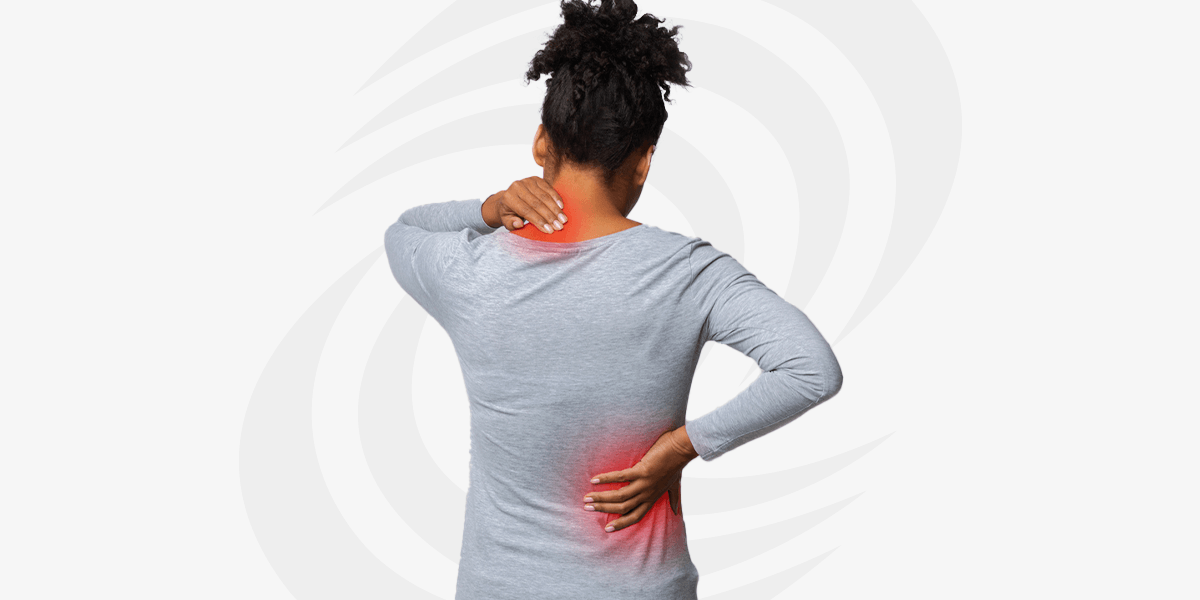
For many women, chronic back and neck pain isn’t a sudden injury, but a slow accumulation of daily stressors. Whether it is the repetitive strain of a corporate desk job, the physical demands of motherhood, or the hormonal shifts that affect ligament laxity during and after pregnancy, the female body often absorbs structural stress differently than the male body.
When pain becomes a constant background noise in your life, it doesn’t just affect your mobility; it erodes your sleep quality, diminishes your productivity at work, and limits your ability to engage with your children or hobbies. The goal isn’t simply to “mask” the pain with medication, but to address the mechanical imbalances causing the inflammation.
The Hidden Culprits of Female Spinal Misalignment
Women often experience specific biomechanical challenges that lead to spinal dysfunction. Understanding these triggers is the first step toward a sustainable recovery.
The “Tech Neck” and Desk Ergonomics
Spending eight to ten hours a day staring at a monitor or a smartphone creates a forward-head posture. This puts an immense amount of pressure on the cervical spine. Over time, this leads to tension headaches and a radiating tightness that travels from the shoulders down to the lower back. For women in professional settings, this is often dismissed as “stress,” when it is actually a structural misalignment.
The Pregnancy and Postpartum Shift
Pregnancy shifts a woman’s center of gravity forward, forcing the lumbar spine to curve more deeply (hyperlordosis). Combined with the hormone relaxin, which loosens joints to prepare for birth, the spine becomes more susceptible to instability. Postpartum, the combination of carrying a growing infant and the repetitive motion of breastfeeding often leaves women with chronic upper-back pain and pelvic instability.
Hormonal Fluctuations and Joint Stability
Estrogen plays a role in maintaining the health of connective tissues. As women transition through different life stages, changes in hormone levels can affect the elasticity of ligaments and the lubrication of joints, making them more prone to stiffness and misalignment.
Transitioning from Temporary Relief to Long-Term Mobility
Many women rely on foam rollers, heating pads, or over-the-counter anti-inflammatories to manage flare-ups. While these provide temporary comfort, they do not correct the underlying joint dysfunction. To regain full mobility, a shift toward corrective care is necessary.
The Role of Spinal Adjustments
Corrective care focuses on the relationship between the structure of the spine and the function of the nervous system. When a vertebra is misaligned (a subluxation), it can interfere with nerve signals, leading to pain, numbness, or muscle weakness. Precise adjustments help restore the natural curvature of the spine, reducing the pressure on discs and nerves.
For women living in Utah who are seeking professional intervention to stop the cycle of chronic pain, visiting a qualified chiropractor St George can provide the diagnostic clarity needed to create a personalized treatment plan. Rather than a one-size-fits-all approach, targeted care addresses the specific needs of the female anatomy, whether that involves pelvic realignment or cervical decompression.
Integrating Strength and Flexibility
Adjustment is the catalyst, but stability is the goal. To prevent pain from returning, corrective care should be paired with specific movements:
- Core Stabilization: Strengthening the transverse abdominis helps support the lower back, which is critical for postpartum recovery.
- Thoracic Mobility: Incorporating chest openers and shoulder retractions counteracts the “slump” associated with desk work.
- Mindful Movement: Incorporating walking or yoga helps maintain the joint mobility achieved during chiropractic sessions.
Measuring Success Beyond the Absence of Pain
The true indicator of recovery isn’t just the day the pain stops, but the return of functional capacity. Success looks like being able to sit through a two-hour meeting without needing to stand up and stretch every ten minutes. It looks like lifting a toddler without a sharp pinch in the lower back or waking up feeling refreshed rather than stiff.
By addressing the structural root of the problem, women can move away from a reactive healthcare model—where they only seek help during a crisis—and move toward a proactive model of wellness. Investing in spinal health ensures that the body remains resilient against the inevitable stresses of a busy professional and personal life.